Skip to Main Content

From Little Acorns Grow Big Oaks

Nayland is a quintessentially English village in Suffolk. Set in the heart of Constable country within an Area of Natural Outstanding Beauty, the village contains over 100 listed buildings, many of them timber framed, with parts of the village that remain relatively unchanged since the 16th century.

Transition Nayland was the brainchild of Will Hitchcock, our chair. In the spring of 2009, having read the Transition Handbook which he described as his 'epiphany', Will decided to set up a Transition Initiative and, pulling together a handful of like-minded friends from all walks of life, Transition Nayland was born.

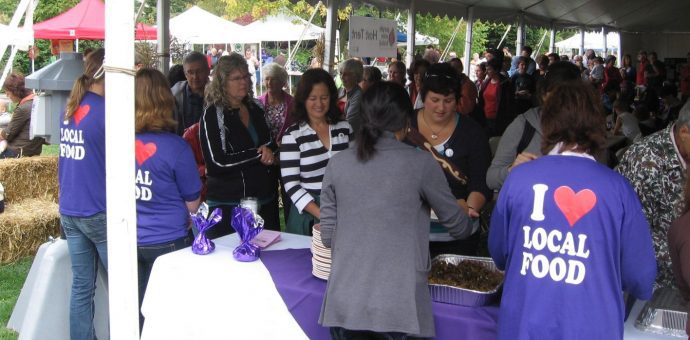
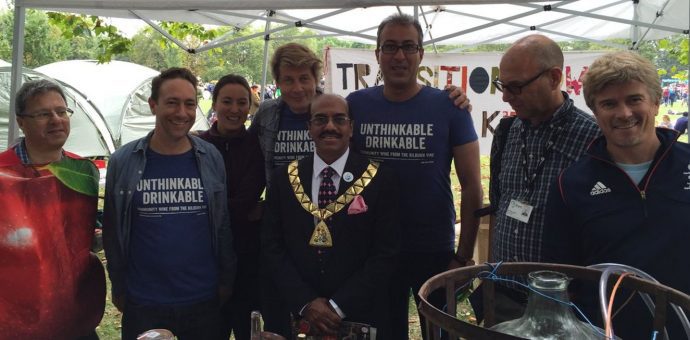
Foraging Stall at Nayland Festival 2010Like many TI’s, Transition Nayland began its journey with awareness raising events. We held film nights, ran a soup kitchen at the Christmas faye, held a BBQ for villagers to bring along their gluts of produce to cook and share. We cooked a ‘5 mile feast’ feeding several hundred people at the local village festival and linked up with British Food Fortnight to run an apple press and market stall in the village centre to promote local and seasonal food. These events were well received yet engaging local people in Transition hasn’t always been straightforward.

Professor Jules Pretty OBE, patron of Transition Nayland and Pro-Vice Chancellor at the University of Essex (Sustainability and Resources) describes Nayland as a ‘socially rich’ community. Nonetheless, it can take time for a community, even a supportive one like ours, to engage and adapt to a more sustainable way of life. Undertaking Transition is a long term commitment, an unknown journey with no certain outcome. But we believe it is a journey worth taking and so, for the last three years, we have worked tirelessly to encourage and involve our community in the process of Transition and the ventures we have embarked on to support it.

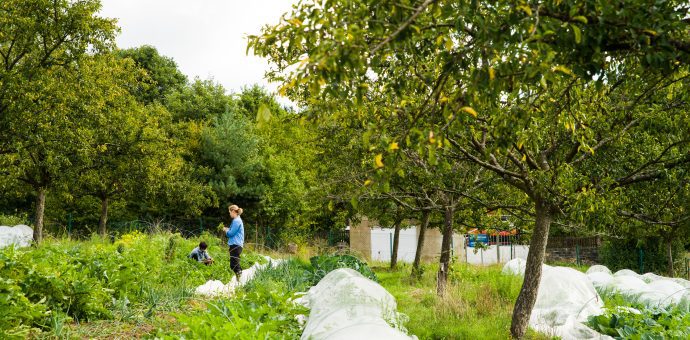
Our first project was to extend allotment provision in the village. We applied for funding from the community council, lobbied the parish council then spent a warm autumn weekend ploughing and fencing the field, creating 4 new plots which are still in use today.

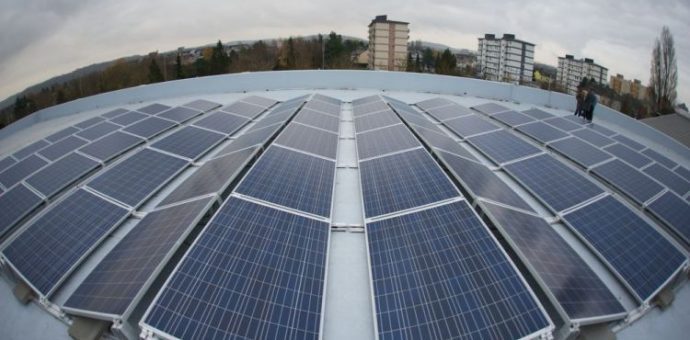
Buoyed by this success, ideas for more ambitious projects were forming. In the Spring of 2011 these came to fruition with the formation of Green Energy Nayland (GEN), a pioneering community energy company which saw Nayland Primary School benefit from the installation of 84 solar PV panels funded by a community share issue. With a peak capacity of 15 kW the installation saved the school over £1000 and 8 tonnes of CO2 in its first year.

GEN Solar Project - Nayland Primary SchoolIn the spirit of Transition, GEN shared good practice and the model GEN developed is now used widely by community energy projects across the UK. GEN have had enquiries from as far afield as Japan and taken part in research projects run by the Jaén University (Spain) and Co-operatives UK. The GEN solar project features at the UK’s BRE Innovation Park and also in an Australian Centre of Excellence for Local Government consultation paper on community governance.

GENs legacy does not stop there. Together with pupils from Nayland School, GEN took part in a film ‘The Democratisation of Energy’ which is being used for national education and awareness raising initiatives. In 2012, GEN was named the best Community Energy Project 2011 at Suffolk Greenest County awards and was winner of the Environmental Awareness Award at the Colchester Business Awards.

It is testament to the diligence, energy and ambition of two of our members and the co-founders of GEN, Simon Gilhooly and Will Hitchcock, that since the formation of GEN both have gone on to become respected voices in the renewable energy field with Will a regular panellist on the Suffolk Climate Change Forum alongside local MPs, and Simon being approached to consult on the launch of a policy document concerning the new Energy Bill.

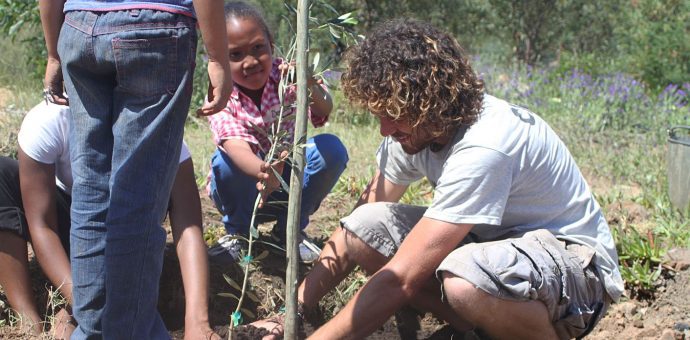
Nature Club at Nayland SchoolBuilding on the strong ties GEN developed with Nayland School we worked closely with them on a project to establish a wildlife garden within the school grounds. Emma Bishton of TN successfully applied for a grant from the Dedham Vale AONB Sustainable Development Fund enabling the school to plant the garden providing a variety of habitats for wildlife as well as an outdoor learning space for the children. As a TN member and eco-parent at school, I help run an after-school nature club, harnessing the enthusiasm the children have for nature and taking the opportunity to teach them about our environment. Hector Bunting of TN helped the children plant trees and TN also helped them build a new composting system.

I also helped with a project to have energy sensors installed throughout the school. The sensors provide real time energy consumption figures enabling the school to determine how efficiently appliances are running. It also allows the school to get the maximum benefit from power their solar panels generate. We also have a project in the pipeline for 2013 to replace the existing T8 fluorescent tube lighting in Nayland School with LED lighting and energy efficient T5 fluorescent strip lighting.

The relationship we have built with the school is an important one and central to the way in which we see Transition Nayland developing. The bigger picture here is that the solar panels, the energy monitoring system, LED lighting and the wildlife garden are important teaching resources helping to educate the children on the importance of reducing energy consumption and caring for our environment. By building a relationship with the school, we are trying to encourage behaviour change in young people and those connected to them so that good habits learned in school are followed through into homes and communities. We hope that supporting and encouraging the school in this way will also give local people an opportunity to better relate to Transition.

Something valuable we have learnt on our journey so far is that it’s not just headline projects that make a difference to our community. In 2012, for the third year running, we supported our annual village Christmas Fete with Steve Maguire of TN organising a ‘5 mile soup’ stall. It was gratifying to have people tell us they were looking forward to tasting our delicious soups again. Likewise, to be digging over at the allotments and be flagged down by an over-excited 6 year old asking when the next eco-club is, or to be strolling through the village and be stopped and asked for advice on having solar panels fitted or even just to be told by people that they look forward to flicking to the back page on the monthly community newsletter to see what the TN team have been up to.

But as well as these highs there have also been lows. It is hard work maintaining momentum after great successes like GEN. How do you follow that? It can be difficult to stay motivated and enthusiastic when our numbers are so few. We once sent out 150 surveys asking people what they thought about the idea of a local food hub. We got 3 responses. So that told us!

The bottom line is that Transition can be challenging. It’s not easy to measure what impact you are having on your community. In some respects it’s like taking a leap of faith. You just have to trust that you are making a difference and occasionally something will happen that makes you smile and appreciate that perhaps you are....

At a recent meeting of the school eco-team, pupils were asked for suggestions on how to encourage other pupils to reduce energy consumption. One 9 year old enthusiastically suggested giving a wedgy to anyone seen leaving a light on when leaving a room. It was a cheering moment to realise that perhaps before me sat the chair of Transition Nayland for the next generation.... we just need to make sure it’s still there for him. Michaela Woollatt, Transition Nayland, West Suffolk

All Images Michaela Woollatt: Foraging Stall Nayland Festival 2010; GEN Solar Project - Nayland Primary School; Nature Club at Nayland School

Comments

Mark Watson's picture

a long term commitment

Great hearing about Transition Nayland, Michaela, and all your projects big and small. What you're saying here about Transition's being a long term commitment with its successes but also its struggles to maintain momentum really made sense to me. And that the signs we're making a difference often come in small ways (and sometimes through small people).

What I've been aware of whilst editing this week is just how much we've all actually been doing these past years in Transition in East Anglia. And sitting down to write or read about the initiatives really brings that home.