Skip to Main Content

Funding and Transition Omagh

Grant culture and the insidious effects it has on organisations.

I moved to Northern Ireland twenty-seven years ago resolving to settle here and somehow make a living. This was problematic at the time, as it was in the midst of the “Troubles” and jobs were thin on the ground. My friend, wanting to encourage me, said: “Dont worry. Think of something and start up your own business, there are grants here for everything!!” Not really believing it I did indeed start my own business and had cause to remember her words, when “Blimey!” less than a year later I had a grant of £16,000.00 to grow a small landscaping business. I had hardly more to do than fill in a business plan and send it off to the relevant body.

The game of moneyLittle did I know at that time how pervasive this grant culture was all across life in Northern Ireland....People often joked that you could get a grant for getting out of bed! It wasn’t as far from the truth as you might think. The economy here was so bad that we needed every little bit of help that came our way. In 1992 the public sector accounted for 37% of the workforce and our traditional engineering plants and shirt factories were but distant memories. Yes, it's true that Strabane, a town less than ten miles from where we live, was the employment black spot in Europe in the eighties with employment the highest per head of population of any town in the European economic zone.
 
We really needed financial assistance injected into our economy at every level, but it's also true that this pervasive funding culture served to create a climate of expectancy combined with dependancy. People expected, almost as a right, that things should be provided for free, or at least heavily subsidised. It goes without saying that things received for free have little or no value and are not appreciated.
 
This was in marked contrast to the Republic of Ireland where there was a saying “you get nothing for nothing!“ Organisations such as  the Tidy Towns and Meals on Wheels were all unsubsidised for a very long time.  If you wanted something to happen in your community you got up and did it, whilst simultaneously raising the funds to do it. There was no funding available, at least not until the height of the Celtic Tiger boom days. The Republic didn’t have the luxury of forty years of funding thrown at the country, as we did here in Northern Ireland (albeit they didn’t have a civil war either). The knock on effect here has been that we are almost incapable of helping ourselves, the expectation being that someone should fix it, that there must be a grant that may be accessed to enable us to move forward. We are paralysed and have an inability to solve our problems. Our resilience has been sucked out of us. We are a living culture of dependancy and have lost our can do attitude.
 
What happened in the Republic where there were no grants, foundations, trusts or handouts? We had the birth of the Transition movement, TransitionTowns and the birth of the Grow it yourself Movement (GIY). What is happening here in Northern Ireland? Very little, one or two Transition towns... maybe we are all too tired given the amount of civil unrest and upheaval that occurred here over the last quarter of a century, maybe we just want a quiet life, maybe we do not know how to respond. I am sure the reasons are many and varied and would make an interesting sociological study.
 
Timebank cakeHoming in on Transition Omagh. Right at the start we decided that if we were going to follow funding it had to be in line with what it is that we were up to in the world. Too many of us had experienced the ghastly spectre of working in “funding led” organisations, which were little more than job creation schemes. Too many of us had seen projects and great community schemes crash and come to nothing because rationale, mission statements, objectives, and outputs were simply ignored and abandoned in an effort to meet funding specifications. Too many of us had worked in community organisations that were forced to create unasked for, top-down, sometimes plain bizarre, community activities and programmes which were doomed to fail from the start. The result being that the community organisations grew further and further away from the roots of their original community.
 
No! no! Transition Omagh was not going to do that. Here's how we got on!

Year One

We set out full of hope and expectation and achieved a great deal without one iota of funding, using the energy, innovativeness and creativity usually associated with the Transition movement. However this did not take us very far, as every time we wanted to run an event we needed public liability insurance. That was the start of it, we had to have some money coming in from somewhere. We raised money in many different little ways which was adequate but not sustainable over a long period. We then started to look at funding and grants, filled in a couple of applications and have slowly and inexorably been drawn down the well beaten path of “grant chasing”. Just because we are on that well beaten path doesn’t necessarily mean it's the right track. Funding and what it represents is the absolute antithesis to all that is beloved to us in Transition and our way of being in the world and somehow I have the feeling it will eventually force us down a road we do not want to go.

Year two

We manage to attract one or two small grants and work gets done. Committed to following the bottom line if it goes toward the possibility of lowering our carbon footprint, we say “ lets do it”. Always in front of us is the constant effort needed for this and this gradually eats into peoples' energy and time, slowly eroding enthusiasm and joie de vivre. A continuous background distraction drawing us away from what it is we really want to be at.

 Launch of TimebankYear three

Economic downturn finally impinges on life in NI and people are forced to concentrate on the damnable pastime of making a living. Here for the first time it becomes evident that we are failing to move forward, mostly due to economic constraints. The first to go is the Time Banking co-ordinator forced to take full time employment to meet mortgage obligations. Another core member must turn attention to making a living because her income stream has dried up. The writer too is forced to pay attention to same because her life partner is out of work and so on. We are now at the stage where we either go actively after substantial funding or shut up shop. How this happens either through grants, social enterprise activities or otherwise remains to be seen. 
 
CrocusSo as Transition Omagh suffers I am reminded of one of the core principals of permaculture “Obtain a yield” or in different words “one cannot work on an empty stomach”, ruefully agreeing with this basic tenet yet knowing that the road not taken is somehow still lost in the undergrowth. 


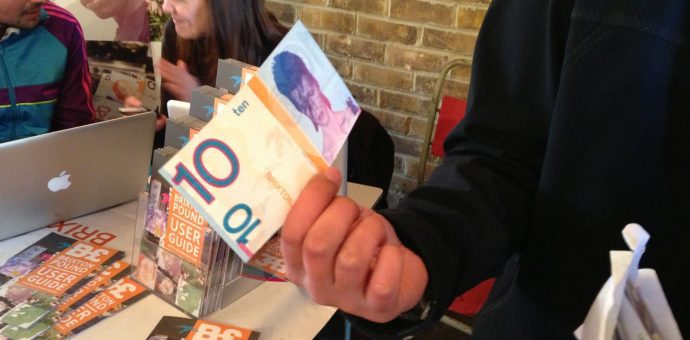
Photograph 1 Monoply Money
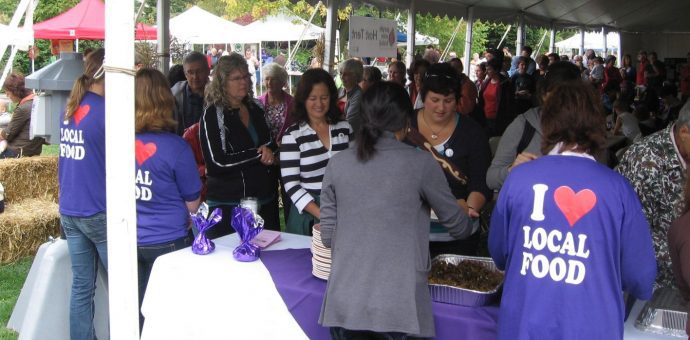
Photograph 2 Launch of the Omagh Time Bank
Photograph 3 The Omagh Time Bank Celebration Cake
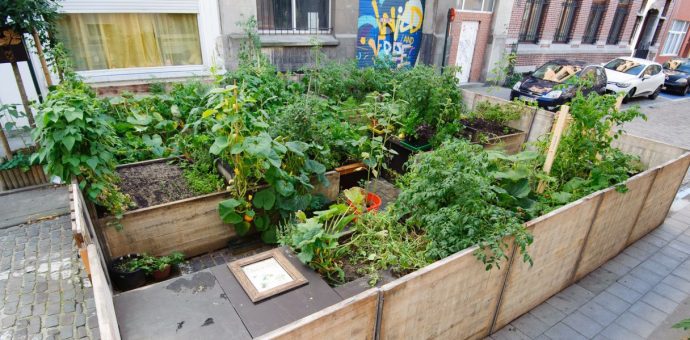
Photograph 4 Spring time in Omagh

Video link

Comments

Kerry Lane's picture

Tell me about it!

So much of your post rings true, even having only been in the Scottish funding culture for a year. I will save my thoughts for my blog later this week though.

Marella Fyffe's picture

Funding and Transition

Thanks Kerry I will be keen to read what you will write.

Marella Fyffe's picture

Funding and Transition

Thanks Kerry I will be keen to read what you will write.

John Mason's picture

Very interesting post. You

Very interesting post. You have tapped into something that I have a bit of e xperience with, though not via Transition as such: the problem with getting funding - and especially public funding - can often be that you end up having to tick somebody else's boxes, who may not fully understand what it is that you are trying to do. Trying to think of examples quickly, one that comes to mind is that a local project to clear some rhododendrons was struggling a bit so I offered to help - chainsaw owner, 30 years' regular experience, no accidents - but was told I couldn't because I had no paperwork/PL insurance/blah blah blah. So anyone can buy the same piece of kit, go on a course, get the ticket, buy the insurance and be out there using a potentially dangerous item with a week's experience and all the boxes are ticked. They will have no idea how engine size controls how individual makes/models kick-back, for example (the difference can be spectacular). But the boxes are ticked. It saddens me that there is no longer a box labelled 'experienced?'.

Cheers - John

Doly Garcia's picture

In all I've seen in voluntary

In all I've seen in voluntary organizations, funding is often an issue in one way or another. Transition Brighton & Hove, the initiative I was involved in, had some internal problems, but what really killed it was that somebody chose at that point to go after funding before getting really clear about what the people in the initiative wanted to do. Result: we got a grant given and we didn't even know what we wanted to do with it. Struggles immediately followed, with different people with different ideas demanding that their idea was the one that should get the money. This ended up killing the initiative.

Marella Fyffe's picture

Funding and Transition

Hi Doly,

Yes your story resonates . Sorry to hear that it caused so much hassle when it could have achieved so much :-(

Marella